---
title: 11 Interior Design Themes | Custom ADU Builders Portland
description: Which design theme fits your home best? Explore 11 styles and learn how to create a cohesive, comfortable interior during your remodel.
image: https://blog.cooperdesignbuilders.com/hubfs/Traditional-1.png
---
- About Us
- [Your Expert Guide](https://cooperdesignbuilders.com/design-build-company-difference/)
- [Are We The Right Fit For You?](https://cooperdesignbuilders.com/right-fit-project/)
- [FAQ](https://cooperdesignbuilders.com/have-questions-we-have-answers/)
- [Meet Our Team](https://cooperdesignbuilders.com/meet-our-team/)
- Services
- [Whole House Remodels](https://cooperdesignbuilders.com/services/home-remodeling-portland-or/)
- [Integrated Additions](https://cooperdesignbuilders.com/services/home-additions-portland-or/)
- [Historic Homes](https://cooperdesignbuilders.com/services/historic-home-remodeling-portland-or/)
- [Gourmet Kitchens](https://cooperdesignbuilders.com/services/kitchen-remodel-portland-or/)
- [Primary Suite & Bath Remodeling](https://cooperdesignbuilders.com/services/bathroom-remodels-portland-or/)
- [Attics & Basements](https://cooperdesignbuilders.com/services/basement-attic-remodel-portland-or/)
- [Outdoor Living Rooms & Kitchens](https://cooperdesignbuilders.com/services/outdoor-living-remodeling-portland-or/)
- [Aging in Place](https://cooperdesignbuilders.com/services/aging-in-place-portland-or/)
- [Luxury Remodeling](https://cooperdesignbuilders.com/services/luxury-home-remodeling/)
- [ADUs](https://cooperdesignbuilders.com/services/adu-builders-portland-or/)
- [Testimonials](https://cooperdesignbuilders.com/home-remodeling-testimonials/)
[](https://www.cooperdesignbuilders.com)
- [Process](https://cooperdesignbuilders.com/design-build-process/)
- [Portfolio](https://cooperdesignbuilders.com/remodeling-portfolio/)
- [Blog](https://blog.cooperdesignbuilders.com)
- [Contact us](https://cooperdesignbuilders.com/schedule-a-consultation/)
- About Us
- [Your Expert Guide](https://cooperdesignbuilders.com/design-build-company-difference/)
- [Are We The Right Fit For You?](https://cooperdesignbuilders.com/right-fit-project/)
- [FAQ](https://cooperdesignbuilders.com/have-questions-we-have-answers/)
- [Meet Our Team](https://cooperdesignbuilders.com/meet-our-team/)
- Services
- [Whole House Remodels](https://cooperdesignbuilders.com/services/home-remodeling-portland-or/)
- [Integrated Additions](https://cooperdesignbuilders.com/services/home-additions-portland-or/)
- [Historic Homes](https://cooperdesignbuilders.com/services/historic-home-remodeling-portland-or/)
- [Gourmet Kitchens](https://cooperdesignbuilders.com/services/kitchen-remodel-portland-or/)
- [Primary Suite & Bath Remodeling](https://cooperdesignbuilders.com/services/bathroom-remodels-portland-or/)
- [Attics & Basements](https://cooperdesignbuilders.com/services/basement-attic-remodel-portland-or/)
- [Outdoor Living Rooms & Kitchens](https://cooperdesignbuilders.com/services/outdoor-living-remodeling-portland-or/)
- [Aging in Place](https://cooperdesignbuilders.com/services/aging-in-place-portland-or/)
- [Luxury Remodeling](https://cooperdesignbuilders.com/services/luxury-home-remodeling/)
- [ADUs](https://cooperdesignbuilders.com/services/adu-builders-portland-or/)
- [Testimonials](https://cooperdesignbuilders.com/home-remodeling-testimonials/)
- [Process](https://cooperdesignbuilders.com/design-build-process/)
- [Portfolio](https://cooperdesignbuilders.com/remodeling-portfolio/)
- [Blog](https://blog.cooperdesignbuilders.com/)
- [Contact Us](https://cooperdesignbuilders.com/schedule-a-consultation/)
# 11 Interior Design Themes to Consider for Your Portland Remodel
Posted by [Cooper Design Build](https://blog.cooperdesignbuilders.com/author/cooper-design-build) on Aug 11, 2026, 8:10:35 AM
- **A clear design theme keeps the remodel cohesive from room to room.**
- **Portland homes suit styles that balance character with modern function.**
- **Natural materials help interiors feel warm, calm, and connected.**
- **Repeating finishes and colors create visual continuity.**
- **One primary style makes it easier to blend in secondary influences.**
Choosing a design theme gives your remodel direction. It connects the layout, materials, colors, lighting, and furnishings so everything feels like it belongs in the same home. A theme works just as well for major renovations as it does for focused projects like a new ADU.
When you search for custom ADU builders in [Portland](https://cooperdesignbuilders.com/services/adu-builders-portland-or/), conversations start with square footage and permitting. The interior direction matters just as much. The new space needs to feel connected to what already exists.
The best theme suits your home's architecture, your lifestyle, and how each room gets used. These 11 approaches offer a solid starting point.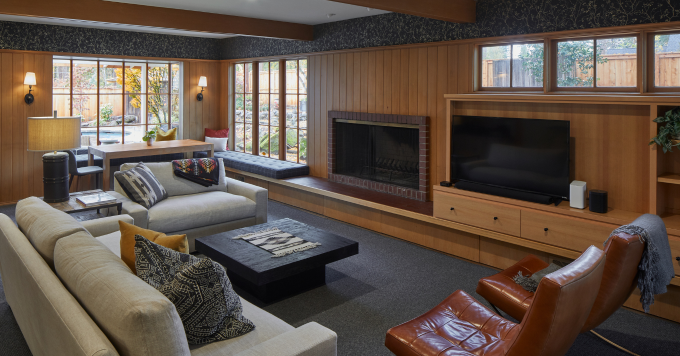
## Which design themes work in Portland?
Portland homes range from historic Craftsman to mid-century to newer urban builds. The strongest themes respect those architectural differences while supporting how people live now.
### 1. Pacific Northwest modern
This draws from the region's forests, mountains, and muted light. Wood, stone, warm neutrals, and large windows create a calm connection between inside and outside. Clean lines keep it current while natural materials add warmth. It works best in homes with views or strong indoor-outdoor flow.
### 2. Organic modern
Simple forms meet tactile materials. White oak, natural stone, linen, plaster, and handmade tile soften streamlined cabinetry and open layouts. The style feels polished without being formal, and the restrained palette lets the grain and texture of each material shine.
### 3. Contemporary Craftsman
This keeps the warmth and detail of traditional Craftsman homes while updating the layout and finishes. Built-in cabinetry, wood trim, and substantial millwork stay central. Simpler profiles, updated lighting, and more open flow help the home work for modern living.
### 4. Warm minimalism
Clarity and comfort with carefully chosen details. Rooms stay visually calm, but natural wood, layered textiles, and soft colors prevent anything from feeling stark. Storage planning is essential, as clutter breaks the clean look. This suits homeowners who want fewer visual distractions.
### 5. Mid-century modern
Perfect for many Portland-area homes built from the 1940s through 1970s. Low-profile furniture, geometric forms, warm wood tones, and strong connections to the outdoors define the style. During a remodel, original brick or paneling can guide new material selections.
### 6. Scandinavian
Emphasizes light, function, and comfortable simplicity. Pale woods, clean cabinetry, soft neutral colors, and practical furniture keep rooms open and easy to use. This approach works well during cloudier months. Warm lighting and textured fabrics keep spaces welcoming year-round.
### 7. Japandi
Blends Scandinavian function with Japanese natural materials and quiet craftsmanship. Uncluttered layouts, low visual weight, and a limited palette define it. Wood, stone, limewash, and handcrafted pieces fit naturally. Each item should have purpose and space around it.
### 8. Transitional
Brings traditional and contemporary together in one balanced interior. Classic cabinet profiles and familiar materials pair with simpler lighting and cleaner lines. This works when you want a current remodel without being tied to a trend. It also connects older architectural details with newer spaces or additions.
### 9. Updated traditional
Established forms, symmetry, and millwork approached with a lighter, more relaxed hand. Painted cabinetry, detailed trim, and marble or quartz surfaces create a refined look. Cleaner furniture lines and less formal room arrangements make the home livable every day.
### 10. Industrial contemporary
Uses metal, concrete, [exposed brick](https://history.utah.gov/blog/let-that-brick-breathe/), and dark wood. It's especially effective in lofts and converted spaces. The style needs warmth to feel comfortable. Upholstery, rugs, natural wood, and thoughtful lighting balance harder surfaces and darker finishes.
### 11. Collected eclectic
Combines pieces from different styles, periods, or places while maintaining a clear visual connection. That connection comes from a consistent color palette, repeated materials, or similar proportions. This suits homeowners who own art, furniture, or personal objects they want to feature. Editing keeps it expressive without being crowded.
## How do you choose the right theme?
The right theme supports your home's architecture and how you actually live. Inspiration photos are useful, but daily function should guide the choices.
### 1. Start with what's already there
Look at the roofline, windows, ceiling heights, trim, flooring, and original materials. These suggest which themes will feel natural in the space. A theme doesn't need to reproduce the home's original period exactly. It should create a believable relationship between what exists and the new work.
### 2. Think about how you use each room
A household that entertains frequently needs open circulation, durable materials, and flexible seating. A quieter home benefits from smaller zones, softer finishes, and built-in storage. Your design theme should make those practical needs easier to address across kitchens, bathrooms, living spaces, and any new additions.
### 3. Pick details to repeat
Consistency comes from repeating a limited number of materials, colors, shapes, or finishes. Wood tones, metal finishes, door styles, and lighting can connect rooms without making them identical. Creating a clear material palette during design prevents unrelated selections from piling up.
## Can you combine different styles in one home?
Different styles can work together when it's planned carefully. The home still needs a clear visual foundation that carries from one space to another.
### 1. Choose one primary direction
Start with one main theme that guides the architecture, fixed finishes, and larger decisions. A second style can show up through furniture, lighting, art, or selected details. Giving one theme a stronger role makes the home feel intentional.
### 2. Use shared materials and colors
Repeated wood tones, flooring, hardware, paint colors, or stone connect rooms with different personalities. These common elements create continuity as you move through the home. A restrained palette also makes it easier to include distinctive pieces.
### 3. Let rooms have variation
Not every room needs the same mood. A powder room can feel more dramatic while a bedroom uses softer colors and simpler details. Rooms still share enough visual language to feel like parts of one property through consistent trim, doors, flooring, and architectural details.
## 
## Where can I find reliable ADU builders in Portland and the surrounding area?
COOPER Design Build helps turn design ideas into cohesive, buildable plans. With more than 30 years of design-build experience in the Pacific Northwest, our team understands Portland architecture and creates spaces that support modern living, whether you’re exploring[the different ways to add extra footage to a house](https://blog.cooperdesignbuilders.com/what-different-ways-add-extra-footage-house/) or planning a smaller structure that still needs to feel intentional.
From properties near[Council Crest Park](https://www.portland.gov/parks/council-crest-park) to homes across the area, our designers and builders collaborate through[the process of pre-construction](https://blog.cooperdesignbuilders.com/what-happen-before-construction), construction, and final walkthrough. That keeps the layout, architectural details, and interior finishes connected from the start, especially when[matching an ADU to your home’s design](https://blog.cooperdesignbuilders.com/what-makes-ADU-feel-part-property/) matters as much as square footage. Schedule a consultation with us and get started!
Topics: [Custom Home Design](https://blog.cooperdesignbuilders.com/topic/custom-home-design)
### Subscribe Here!
### Recent Posts
[Schedule a Consultation](https://cooperdesignbuilders.com/schedule-a-consultation/)
Call Us: [503-282-0545](tel:5032820545)
### Posts by Tag
- [Home Remodeling (98)](https://blog.cooperdesignbuilders.com/topic/home-remodeling)
- [Design-Build Portland (81)](https://blog.cooperdesignbuilders.com/topic/design-build-portland)
- [Design (76)](https://blog.cooperdesignbuilders.com/topic/design)
- [Custom Home Design (65)](https://blog.cooperdesignbuilders.com/topic/custom-home-design)
- [Planning a Remodel (65)](https://blog.cooperdesignbuilders.com/topic/planning-a-remodel)
- [Remodeling Ideas (37)](https://blog.cooperdesignbuilders.com/topic/remodeling-ideas)
- [Whole Home Remodeling (35)](https://blog.cooperdesignbuilders.com/topic/whole-home-remodeling)
- [Remodeling Tips (32)](https://blog.cooperdesignbuilders.com/topic/remodeling-tips)
- [Custom Home (23)](https://blog.cooperdesignbuilders.com/topic/custom-home)
- [Bathroom Remodeling (22)](https://blog.cooperdesignbuilders.com/topic/bathroom-remodeling)
- [Home Additions (21)](https://blog.cooperdesignbuilders.com/topic/home-additions)
- [Living in Portland (19)](https://blog.cooperdesignbuilders.com/topic/living-in-portland)
- [Luxury Home (18)](https://blog.cooperdesignbuilders.com/topic/luxury-home)
- [Kitchen Design (16)](https://blog.cooperdesignbuilders.com/topic/kitchen-design)
- [Kitchen Remodeling (16)](https://blog.cooperdesignbuilders.com/topic/kitchen-remodeling)
- [Remodeling Investment (16)](https://blog.cooperdesignbuilders.com/topic/remodeling-investment)
- [Home Maintenance (15)](https://blog.cooperdesignbuilders.com/topic/home-maintenance)
- [Aging in Place (12)](https://blog.cooperdesignbuilders.com/topic/aging-in-place)
- [Finance (8)](https://blog.cooperdesignbuilders.com/topic/finance)
- [Featured Projects (6)](https://blog.cooperdesignbuilders.com/topic/featured-projects)
- [Historic Home Remodel (4)](https://blog.cooperdesignbuilders.com/topic/historic-home-remodel)
- [Budgeting (3)](https://blog.cooperdesignbuilders.com/topic/budgeting)
- [Outdoor Spaces (3)](https://blog.cooperdesignbuilders.com/topic/outdoor-spaces)
- [ADU's (2)](https://blog.cooperdesignbuilders.com/topic/adus)
- [Kid-Friendly (2)](https://blog.cooperdesignbuilders.com/topic/kid-friendly)
- [Lighting (2)](https://blog.cooperdesignbuilders.com/topic/lighting)
- [Remodeling Awards (2)](https://blog.cooperdesignbuilders.com/topic/remodeling-awards)
- [Sustainable Remodeling (2)](https://blog.cooperdesignbuilders.com/topic/sustainable-remodeling)
- [Energy Efficiency (1)](https://blog.cooperdesignbuilders.com/topic/energy-efficiency)
- [Luxury Remodels (1)](https://blog.cooperdesignbuilders.com/topic/luxury-remodels)
- [bathroom design (1)](https://blog.cooperdesignbuilders.com/topic/bathroom-design)
- [color (1)](https://blog.cooperdesignbuilders.com/topic/color)
See all
## We build trust as well as homes!





[](https://cooperdesignbuilders.com/)
### Contact Us
[info@cooperdesignbuild.com](mailto:info@cooperdesignbuild.com) [503-282-0545](tel:5032820545) [4560 SW 96th Ave, Beaverton, OR 97005](https://www.google.com/maps?ll=45.487169,-122.775189&z=10&t=m&hl=en&gl=GB&mapclient=embed&cid=4490823392713310045)
[schedule a consultation](https://cooperdesignbuilders.com/schedule-a-consultation/)
### Quick Links
- [Blog](https://blog.cooperdesignbuilders.com/)
- [Resources](https://cooperdesignbuilders.com/resources/)
- [Locations](https://cooperdesignbuilders.com/locations/)
- [Portfolio](https://cooperdesignbuilders.com/remodeling-portfolio/)
- [Testimonials](https://cooperdesignbuilders.com/home-remodeling-testimonials/)

Licensed Bonded & Insured: CCB# 77239 | COOPEDB743N6
[§](https://www.facebook.com/cooperdesignbuildpdx/)
© 2025 All Right Reserved