- Deconstruction saves usable lumber, doors, windows, fixtures, and trim.
- It can keep 75–80% of remodel debris out of landfills.
- It handles asbestos, lead paint, and silica dust more safely.
- Older materials and craftsmanship can be preserved and reused.
- COOPER partners with Lovett to support sustainable remodeling.
As builders and home remodelers serving Portland and beyond, we spend a lot of time thinking about how things come together. Materials, spaces, and details all play a role in creating a home that feels intentional. Just as important, though, is how things come apart.
This Earth Day, we are taking a moment to focus on a part of the process that is often overlooked. Before anything new is built, there is an opportunity to make a thoughtful decision about what happens to the existing structure. At COOPER Design Build, that means choosing deconstruction instead of traditional demolition whenever possible, thanks to our trade partner, Lovett Deconstruction.
What is the difference between home demolition and deconstruction?
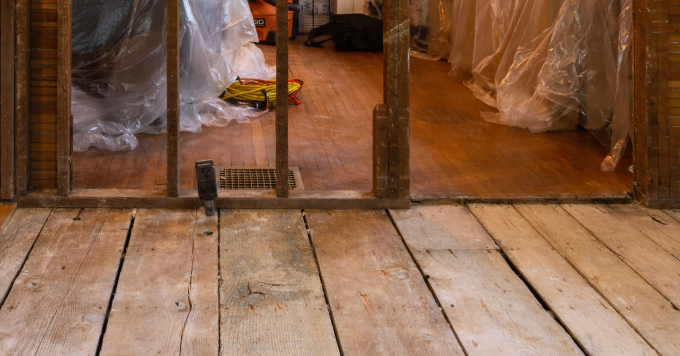
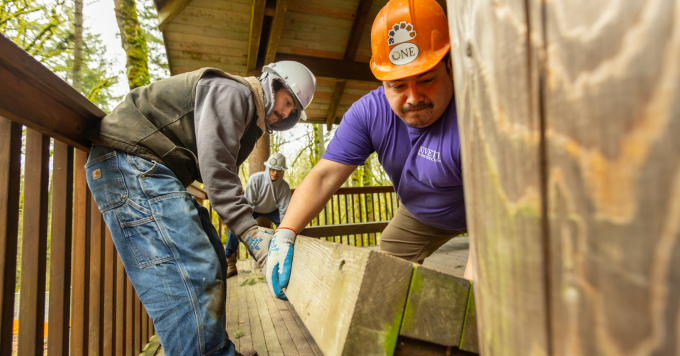
Traditional demolition is straightforward. A structure is torn down and the materials are hauled away, with most of it ending up in a landfill. Deconstruction takes a different approach. It is a careful, hands-on process where a home is dismantled piece by piece in the reverse order it was built.
This allows materials to be salvaged, reused, or recycled. Lumber, doors, windows, fixtures, and even small architectural details can be preserved and featured in a new space. Materials that have been part of a home for decades are given another life instead of being discarded.
The difference in impact
The difference in impact is significant. When a home is demolished, nearly all of the material becomes waste. With deconstruction, it is possible to keep up to 75 to 80 percent of those materials out of the landfill.
That reduction matters, especially when you consider how many homes are remodeled or removed each year. Construction debris is one of the largest contributors to landfill waste in the United States, so reducing even a portion of that has a meaningful effect.
Practical advantages
There are practical benefits as well. Deconstruction allows for more controlled handling of hazardous materials such as asbestos, lead paint, and silica dust. This creates a safer environment for workers and helps protect surrounding neighborhoods.
It also supports a more responsible building process by reducing the demand for newly manufactured materials. When existing materials are reused, fewer resources are required to produce and transport new ones.
Preserving older materials
There is also a level of respect involved in this approach. Many of the homes we work in have a history that is worth honoring. Old-growth wood, original millwork, and carefully crafted details are not easily replaced.
These materials reflect a level of craftsmanship that is often difficult to replicate today. Deconstruction makes it possible to preserve those elements and keep them in circulation, whether they are reused in another project or repurposed in a new way.
How does deconstruction work with modern remodeling?
Our partnership with Lovett Deconstruction is rooted in a shared commitment to this kind of work and protecting the communities where we live and work. Founded in 2005 by Der Lovett, the company’s origin had a clear purpose: to reduce construction debris in landfills. Too many reusable materials were being sent to the landfill, and there was an opportunity to change that.
A shared commitment
Since then, Lovett’s team has focused on diverting as much material as possible from the waste stream while also highlighting the quality and character of older homes. The work is detailed and physically demanding, but it plays an important role in creating a more sustainable building industry.
Keeping materials in circulation
Through this process, salvaged materials are reintroduced into the community. Many items find their way into new homes or renovation projects. Others are made available through local resources such as Habitat for Humanity ReStore, where they can be purchased and reused. This extends the life of those materials and makes them accessible to a wider range of people.
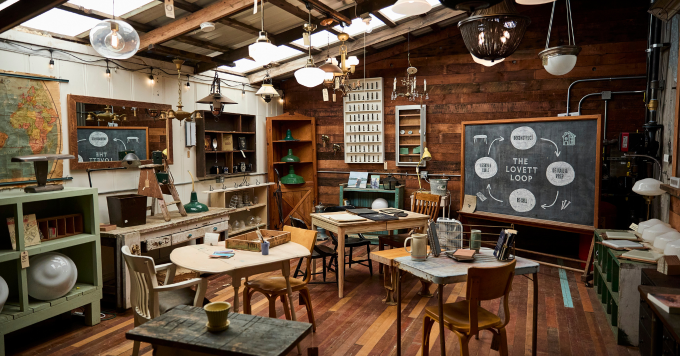
In fact, many of the products from Lovett’s deconstruction efforts end up in their salvage shop. Open to the public, the shop boasts not only construction materials, like lumber, windows, and fixtures, but it is also home to over 60 of Der Lovett’s personal collections.
The shop also features various local collectors, including their most recent collaboration with Sunny Preston of Midnight Sunlight, who has an eye for vintage furniture and decor. You can visit the Lovett Salvage Shop at 4315 NW Saint Helens Road.
The human side of the work
In the 20 years that Lovett Deconstruction has been operating, Der has had many favorite finds, one being a small notebook, probably dating back to the 1940s, that was found in an old tobacco box in a stud cavity in an attic crawl space. The notebook belonged to a teenage girl who used it to write love letters to her crush and sketch pictures of his face. He could tell the book was incredibly important to this girl and was happy he could honor its importance.
Who should you choose as a sustainable home remodeler in Portland?
At COOPER, we believe that good design is not only about the finished product. It is also about the decisions made throughout the process. Choosing deconstruction is one of those decisions, and it’s an approach we recommend whenever it makes sense. It requires more time, planning, and care, but the long-term impact is worth it. Each project becomes an opportunity to reduce waste, preserve valuable materials, and contribute to a more thoughtful and sustainable approach to building.
Earth Day is a reminder that these choices matter. The way we build and remodel has an impact, not just on the homes we create, but on the environment and the communities we serve. By choosing deconstruction as part of remodeling projects, we help reduce construction waste and make it possible to reuse or repurpose materials already present in the home. Building better is not only about what is new. It is also about how we handle what is already there and the responsibility that comes with it.