---
title: How to Coordinate Kitchen Materials | Remodeling Contractors
description: Learn how to coordinate materials and finishes in a kitchen remodel for a balanced design and long-lasting style with expert remodeling guidance.
image: https://blog.cooperdesignbuilders.com/hubfs/Why%20is%20coordinating%20materials%20important%20in%20a%20kitchen%20remodel.jpg
---
- About Us
- [Your Expert Guide](https://cooperdesignbuilders.com/design-build-company-difference/)
- [Are We The Right Fit For You?](https://cooperdesignbuilders.com/right-fit-project/)
- [FAQ](https://cooperdesignbuilders.com/have-questions-we-have-answers/)
- [Meet Our Team](https://cooperdesignbuilders.com/meet-our-team/)
- Services
- [Whole House Remodels](https://cooperdesignbuilders.com/services/home-remodeling-portland-or/)
- [Integrated Additions](https://cooperdesignbuilders.com/services/home-additions-portland-or/)
- [Historic Homes](https://cooperdesignbuilders.com/services/historic-home-remodeling-portland-or/)
- [Gourmet Kitchens](https://cooperdesignbuilders.com/services/kitchen-remodel-portland-or/)
- [Primary Suite & Bath Remodeling](https://cooperdesignbuilders.com/services/bathroom-remodels-portland-or/)
- [Attics & Basements](https://cooperdesignbuilders.com/services/basement-attic-remodel-portland-or/)
- [Outdoor Living Rooms & Kitchens](https://cooperdesignbuilders.com/services/outdoor-living-remodeling-portland-or/)
- [Aging in Place](https://cooperdesignbuilders.com/services/aging-in-place-portland-or/)
- [Luxury Remodeling](https://cooperdesignbuilders.com/services/luxury-home-remodeling/)
- [ADUs](https://cooperdesignbuilders.com/services/adu-builders-portland-or/)
- [Testimonials](https://cooperdesignbuilders.com/home-remodeling-testimonials/)
[](https://www.cooperdesignbuilders.com)
- [Process](https://cooperdesignbuilders.com/design-build-process/)
- [Portfolio](https://cooperdesignbuilders.com/remodeling-portfolio/)
- [Blog](https://blog.cooperdesignbuilders.com)
- [Contact us](https://cooperdesignbuilders.com/schedule-a-consultation/)
- About Us
- [Your Expert Guide](https://cooperdesignbuilders.com/design-build-company-difference/)
- [Are We The Right Fit For You?](https://cooperdesignbuilders.com/right-fit-project/)
- [FAQ](https://cooperdesignbuilders.com/have-questions-we-have-answers/)
- [Meet Our Team](https://cooperdesignbuilders.com/meet-our-team/)
- Services
- [Whole House Remodels](https://cooperdesignbuilders.com/services/home-remodeling-portland-or/)
- [Integrated Additions](https://cooperdesignbuilders.com/services/home-additions-portland-or/)
- [Historic Homes](https://cooperdesignbuilders.com/services/historic-home-remodeling-portland-or/)
- [Gourmet Kitchens](https://cooperdesignbuilders.com/services/kitchen-remodel-portland-or/)
- [Primary Suite & Bath Remodeling](https://cooperdesignbuilders.com/services/bathroom-remodels-portland-or/)
- [Attics & Basements](https://cooperdesignbuilders.com/services/basement-attic-remodel-portland-or/)
- [Outdoor Living Rooms & Kitchens](https://cooperdesignbuilders.com/services/outdoor-living-remodeling-portland-or/)
- [Aging in Place](https://cooperdesignbuilders.com/services/aging-in-place-portland-or/)
- [Luxury Remodeling](https://cooperdesignbuilders.com/services/luxury-home-remodeling/)
- [ADUs](https://cooperdesignbuilders.com/services/adu-builders-portland-or/)
- [Testimonials](https://cooperdesignbuilders.com/home-remodeling-testimonials/)
- [Process](https://cooperdesignbuilders.com/design-build-process/)
- [Portfolio](https://cooperdesignbuilders.com/remodeling-portfolio/)
- [Blog](https://blog.cooperdesignbuilders.com/)
- [Contact Us](https://cooperdesignbuilders.com/schedule-a-consultation/)
# How to Coordinate Materials & Finishes in a Kitchen Remodel
Posted by [Josh Glover](https://blog.cooperdesignbuilders.com/author/josh-glover) on Mar 18, 2026, 6:23:19 AM
- **Coordinating materials and finishes helps a kitchen feel cohesive, balanced, and intentional.**
- **Starting with a focal point and a simple color palette makes material selection easier.**
- **Cabinets, countertops, backsplash, flooring, and hardware should all be considered together.**
- **Reviewing samples side by side helps homeowners spot color, texture, and lighting issues early.**
- **Professional guidance can help prevent costly mistakes and create a kitchen that looks good and works well.**
A kitchen remodel involves more than selecting cabinets or upgrading appliances. One of the biggest design challenges is coordinating materials and finishes so the entire space feels intentional. When colors, textures, and surfaces work together, the result is a kitchen that feels cohesive, comfortable, and visually balanced.
Many homeowners find that this part of the process is harder than expected. It is one thing to like individual samples, but it is another to make sure cabinets, counters, flooring, tile, and fixtures all work together in the same room. That is why many turn to experienced remodeling contractors in Portland who understand how to bring design and function together in a practical way.
From large surfaces to finishing details, every selection of [materials and finishes influences the overall feel of the kitchen](https://cooperdesignbuilders.com/services/home-remodeling-portland-or/).
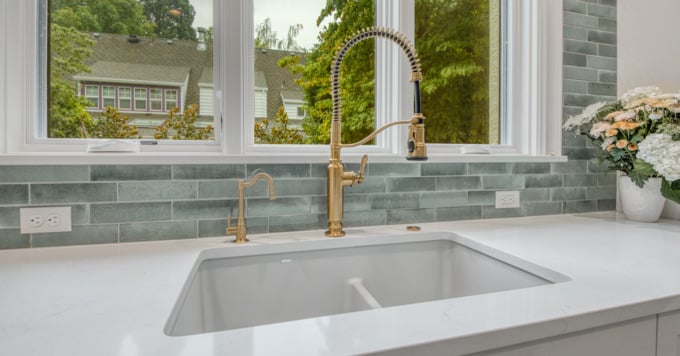
## Why is coordinating materials important in a kitchen remodel?
A kitchen includes many visible elements, and each one contributes to the room’s overall appearance. If those elements are chosen separately without a clear plan, even high-quality materials can feel disjointed.
### 1. It creates a cohesive design
To create a kitchen that feels put together, several core elements should visually align, including:
- Cabinet finishes
- Countertop materials
- Backsplash tiles
- Flooring materials
- Lighting fixtures
- Hardware finishes
When these selections complement one another, the kitchen feels balanced instead of busy. The goal is not to make everything match exactly, but to make each element feel like it belongs in the same space.
### 2. It balances color & texture
Each material introduces something different. Wood adds warmth, stone brings movement and pattern, and metal adds contrast and refinement. When these textures are layered thoughtfully, the kitchen gains depth without feeling cluttered.
A well-balanced kitchen often includes a mix of:
- Smooth surfaces like quartz or glass
- Organic materials like wood or stone
- Metal accents for contrast
This combination helps the room feel visually interesting while still maintaining a sense of order.
### 3. It supports long-term design appeal
Kitchen remodels are long-term investments, so it is important to think beyond what looks good right now. Coordinated materials often age more gracefully because they rely on balance rather than novelty.
A thoughtful palette can also make future updates easier. Homeowners may eventually want to change bar stools, lighting, or accessories, and a cohesive design makes those smaller updates much simpler.
## Where should you start when selecting kitchen materials?
Material selection becomes much more manageable when it follows a clear sequence. Rather than choosing everything at once, it helps to build the design around a few major decisions.
### 1. Start with a focal point
In most kitchen remodels, the visual anchor tends to be one of the following elements:
- Cabinetry
- Countertops
- A statement backsplash
- A kitchen island
Once the focal point is selected, the remaining materials should support it rather than compete with it. For example, if the countertops feature dramatic veining or movement, the cabinetry and backsplash may need to be simpler so the room does not feel overloaded.
### 2. Establish a simple color palette
A controlled palette helps the kitchen feel calm and cohesive. Many successful kitchens rely on three layers of color:
1. A dominant color, often found in the cabinetry
2. A secondary tone, usually in the countertops or backsplash
3. An accent finish used in hardware or lighting
For example, a balanced palette might include:
- Soft white cabinets
- Light gray quartz countertops
- Brushed brass fixtures
This kind of structure gives the design enough variation to feel interesting without making it feel chaotic.
### 3. Review material samples together
One of the most effective ways to avoid mismatched finishes is to review samples side by side before making final decisions. This makes it easier to spot undertones, contrast levels, and texture differences that may not be obvious when materials are viewed separately.
This is also a good time to think about what those products may bring into the home, since some indoor products and building materials can contribute to indoor air pollutants such as [volatile organic compounds](https://www.epa.gov/indoor-air-quality-iaq/volatile-organic-compounds-impact-indoor-air-quality).
It is especially helpful to compare:
- Undertones in tile, paint, and stone
- Contrast between cabinets and countertops
- How natural and artificial light affect the finishes
A sample that looks perfect in a showroom can look very different once it is placed in your home.
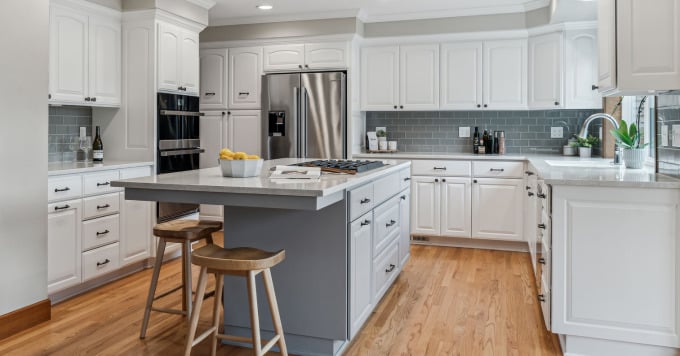
## What materials should always be coordinated in a kitchen remodel?
While every material matters, some combinations have a stronger visual relationship than others. These are the pairings homeowners should pay especially close attention to during the design process.
### 1. Cabinets & countertops
These two surfaces define much of the kitchen’s visual identity, so they should always be considered together. Some combinations that work well in many kitchens include:
- Dark cabinets with light countertops
- White cabinets with a subtle patterned stone
- Natural wood cabinetry with neutral quartz surfaces
The right combination depends on how much contrast you want and whether the space leans more modern, classic, or transitional.
### 2. Backsplash & countertop patterns
Because both of these surfaces can carry texture or pattern, they need to be balanced carefully. To keep them from competing with each other, it helps to follow a few simple guidelines:
- Pair dramatic countertops with simple backsplash tiles
- Use decorative backsplash designs with minimal countertops
This balance helps maintain visual clarity and prevents the kitchen from feeling too busy.
### 3. Flooring & cabinetry
Flooring grounds the kitchen, while cabinetry often sets its tone. If the floor and cabinets clash, the entire room can feel unsettled. Some combinations that tend to create a strong foundation include:
- Hardwood flooring with painted cabinets
- Neutral tile flooring with darker cabinetry
- Natural stone flooring with wood cabinets
These pairings help the room feel stable and connected from top to bottom.
### 4. Lighting & hardware finishes
Although these details are smaller, they play a major role in making the kitchen feel polished. Repeating the same or similar finish across multiple points in the room helps tie everything together.
Some of the most effective finish pairings include:
- Matte black fixtures and hardware
- Brushed brass lighting and handles
- Stainless appliances with brushed nickel accents
Even subtle repetition can make the design feel much more intentional.
## How can professional guidance improve material coordination?
Kitchen remodels involve dozens of choices, and professional guidance helps turn those decisions into a clear, cohesive plan. Designers and builders can help homeowners evaluate how finishes work together, how materials will perform over time, and how the final space will function day to day.
Professional input is especially valuable when it comes to:
- Developing a cohesive material palette
- Evaluating durability and maintenance needs
- Visualizing the finished space before construction
- Preventing design conflicts during installation
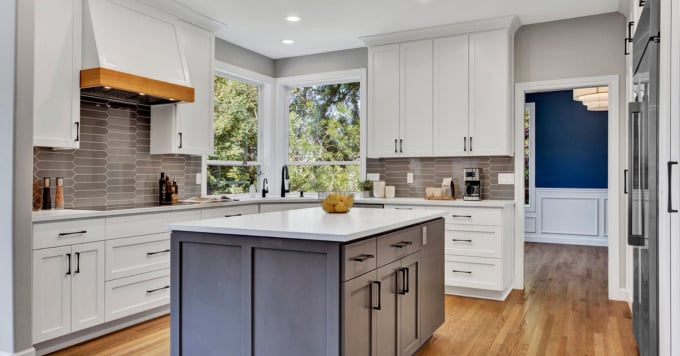
## Where can I find dependable remodeling contractors in Portland & the vicinity?
If you are planning a kitchen remodel and want expert guidance in coordinating materials and finishes, COOPER Design Build & Remodeling of Portland is ready to help. Our team combines thoughtful design, skilled craftsmanship, and a proven process that keeps your renovation organized from concept to completion.
For more than 30 years, we have helped homeowners create kitchens that feel cohesive, functional, and built to last. Whether your home is located near [Washington Park](https://www.portland.gov/parks/washington-park) or elsewhere in Portland, our client-focused approach helps keep your project clear, collaborative, and aligned with your goals.
Many homeowners also explore [ways to improve comfort without adding square footage](https://blog.cooperdesignbuilders.com/how-improve-comfort-home-without-expanding), design [kitchens that support both everyday life and special occasions](https://blog.cooperdesignbuilders.com/how-design-kitchen-works-daily-life-guests), or work through [layout limitations often found in historic homes](https://blog.cooperdesignbuilders.com/how-address-layout-limitations-historic-home). Schedule a consultation today!
[](https://hubspot-cta-redirect-na2-prod.s3.amazonaws.com/cta/redirect/2423012/67511939-2ce6-4251-aef4-e2c4c664ed38)
Topics: [Design-Build Portland](https://blog.cooperdesignbuilders.com/topic/design-build-portland), [Design](https://blog.cooperdesignbuilders.com/topic/design), [Custom Home Design](https://blog.cooperdesignbuilders.com/topic/custom-home-design)
### Subscribe Here!
### Recent Posts
[Schedule a Consultation](https://cooperdesignbuilders.com/schedule-a-consultation/)
Call Us: [503-282-0545](tel:5032820545)
### Posts by Tag
- [Home Remodeling (98)](https://blog.cooperdesignbuilders.com/topic/home-remodeling)
- [Design-Build Portland (81)](https://blog.cooperdesignbuilders.com/topic/design-build-portland)
- [Design (76)](https://blog.cooperdesignbuilders.com/topic/design)
- [Custom Home Design (65)](https://blog.cooperdesignbuilders.com/topic/custom-home-design)
- [Planning a Remodel (65)](https://blog.cooperdesignbuilders.com/topic/planning-a-remodel)
- [Remodeling Ideas (37)](https://blog.cooperdesignbuilders.com/topic/remodeling-ideas)
- [Whole Home Remodeling (35)](https://blog.cooperdesignbuilders.com/topic/whole-home-remodeling)
- [Remodeling Tips (32)](https://blog.cooperdesignbuilders.com/topic/remodeling-tips)
- [Custom Home (23)](https://blog.cooperdesignbuilders.com/topic/custom-home)
- [Bathroom Remodeling (22)](https://blog.cooperdesignbuilders.com/topic/bathroom-remodeling)
- [Home Additions (21)](https://blog.cooperdesignbuilders.com/topic/home-additions)
- [Living in Portland (19)](https://blog.cooperdesignbuilders.com/topic/living-in-portland)
- [Luxury Home (18)](https://blog.cooperdesignbuilders.com/topic/luxury-home)
- [Kitchen Design (16)](https://blog.cooperdesignbuilders.com/topic/kitchen-design)
- [Kitchen Remodeling (16)](https://blog.cooperdesignbuilders.com/topic/kitchen-remodeling)
- [Remodeling Investment (16)](https://blog.cooperdesignbuilders.com/topic/remodeling-investment)
- [Home Maintenance (15)](https://blog.cooperdesignbuilders.com/topic/home-maintenance)
- [Aging in Place (12)](https://blog.cooperdesignbuilders.com/topic/aging-in-place)
- [Finance (8)](https://blog.cooperdesignbuilders.com/topic/finance)
- [Featured Projects (6)](https://blog.cooperdesignbuilders.com/topic/featured-projects)
- [ADU's (4)](https://blog.cooperdesignbuilders.com/topic/adus)
- [Historic Home Remodel (4)](https://blog.cooperdesignbuilders.com/topic/historic-home-remodel)
- [Budgeting (3)](https://blog.cooperdesignbuilders.com/topic/budgeting)
- [Outdoor Spaces (3)](https://blog.cooperdesignbuilders.com/topic/outdoor-spaces)
- [Kid-Friendly (2)](https://blog.cooperdesignbuilders.com/topic/kid-friendly)
- [Lighting (2)](https://blog.cooperdesignbuilders.com/topic/lighting)
- [Remodeling Awards (2)](https://blog.cooperdesignbuilders.com/topic/remodeling-awards)
- [Sustainable Remodeling (2)](https://blog.cooperdesignbuilders.com/topic/sustainable-remodeling)
- [Energy Efficiency (1)](https://blog.cooperdesignbuilders.com/topic/energy-efficiency)
- [Luxury Remodels (1)](https://blog.cooperdesignbuilders.com/topic/luxury-remodels)
- [bathroom design (1)](https://blog.cooperdesignbuilders.com/topic/bathroom-design)
- [color (1)](https://blog.cooperdesignbuilders.com/topic/color)
See all
## We build trust as well as homes!









[](https://cooperdesignbuilders.com/)
### Contact Us
[info@cooperdesignbuild.com](mailto:info@cooperdesignbuild.com) [503-282-0545](tel:5032820545) [4560 SW 96th Ave, Beaverton, OR 97005](https://www.google.com/maps?ll=45.487169,-122.775189&z=10&t=m&hl=en&gl=GB&mapclient=embed&cid=4490823392713310045)
[schedule a consultation](https://cooperdesignbuilders.com/schedule-a-consultation/)
### Quick Links
- [Blog](https://blog.cooperdesignbuilders.com/)
- [Resources](https://cooperdesignbuilders.com/resources/)
- [Locations](https://cooperdesignbuilders.com/locations/)
- [Portfolio](https://cooperdesignbuilders.com/remodeling-portfolio/)
- [Testimonials](https://cooperdesignbuilders.com/home-remodeling-testimonials/)

Licensed Bonded & Insured: CCB# 77239 | COOPEDB743N6
[§](https://www.facebook.com/cooperdesignbuildpdx/)
© 2025 All Right Reserved